When we first walked around Newham Hall Farm, there was no way to pretend otherwise: it was run down, and it was going to be a massive project. The farm had stood empty for several years. Windows were smashed, there were signs of fires, and there was no water, no sewage and no gas. Only the electricity worked.
We bought it anyway. This is the story of why, and of what we have done since.
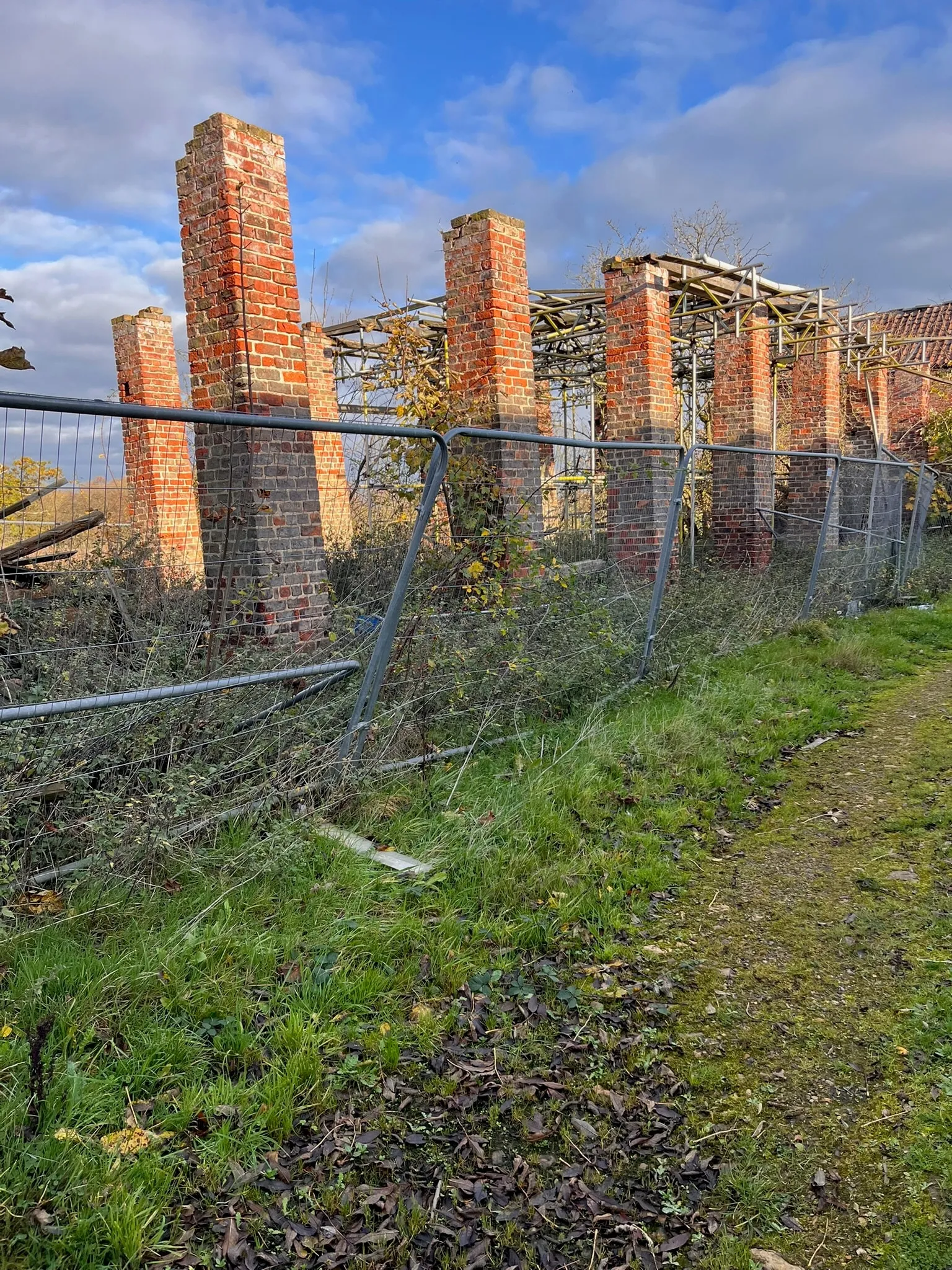 The farm as we found it.
Where we are
Newham Hall Farm sits on the southern edge of Middlesbrough, near Coulby Newham, in the North East of England, in the part of North Yorkshire that meets Teesside.
The name is far older than the buildings. Newham, written as “Nieweham”, and its neighbour Coulby, written as “Colebi”, were two separate hamlets recorded in the Domesday Book of 1086. For most of the centuries since, this was farmland. Middlesbrough itself was little more than a handful of farms until the 1830s, when the town grew at astonishing speed. Its suburbs only reached this area in the 1970s and 1980s. Even now, the local street names, such as Manor Farm Way, Lingfield and Paddock Wood, remember the fields that came before them.
The farm is a small piece of that older landscape that is still here.
A farmhouse from the 1700s
The farm dates from the 1700s, the era of lime plaster.
Before modern gypsum plaster and cement became normal, walls and ceilings were finished with lime: a mix of lime, sand and water, often with animal hair added to hold it together. Lime does not set like modern plaster. It hardens slowly, over weeks, by drawing carbon dioxide back out of the air.
Its great quality is that it “breathes”. Old buildings like ours were not built to keep water out completely. They were built to let moisture in and let it out again. Lime lets that happen. Patching an old lime wall with modern plaster or cement can trap damp inside the wall, and that causes far more damage over time than the original crack did.
So restoring the house properly means working the old way, with old materials. That is one of the reasons this project takes time.
Several years empty
An empty building decays faster than you might expect. With nobody there, small problems such as a slipped slate, a blocked gutter or a cracked pane are never fixed, and they become big ones.
At Newham Hall Farm, people made things worse. Over the years it stood empty, vandals threw rocks through the windows and lit fires on the property. By the time we arrived, all 46 panes of glass had been broken.
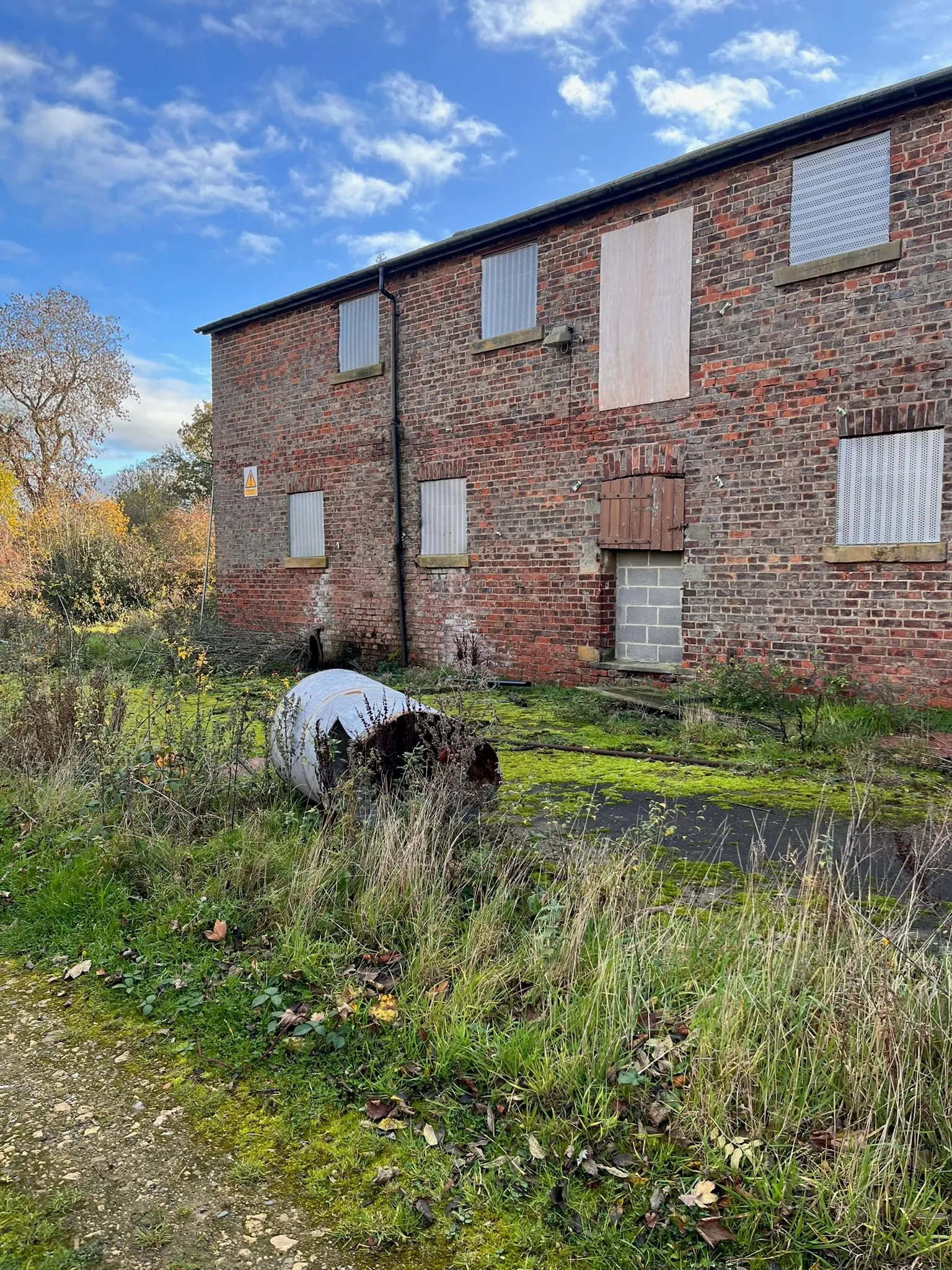 Boarded-up windows on one of the farm buildings.
Starting from nothing
Before we could think about restoring anything, we needed the basics that most homes take for granted.
Water. The good news was that the water supply was already there. It just needed fixing. After several years without use, getting it working again was one of our first jobs.
Gas. The farm had no gas supply. Fortunately, there was a gas pipe nearby, so we brought in a machine to dig a trench for a new pipe to connect the farm to it.
Sewage. The farm had no sewage connection either. It is now connected to the mains.
Water, sewage and gas are now all fixed. That may not sound exciting, but it was the moment the farm stopped being a ruin and started becoming a place people could live and work again.
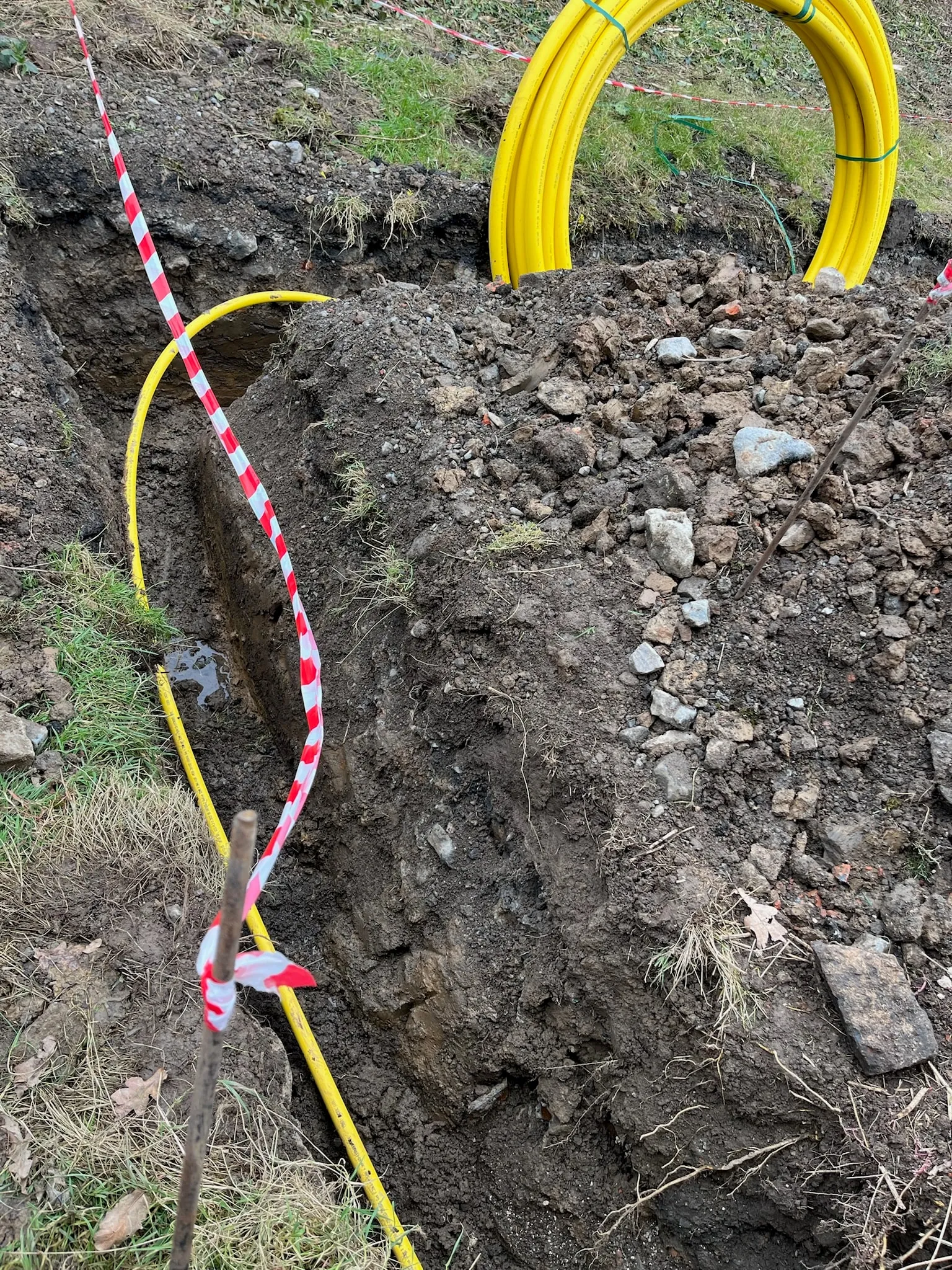 Digging the trench for the new gas pipe.
Who we are
We are two doctors who bought Newham Hall Farm in 2025.
People sometimes ask why two doctors would take on a crumbling farmhouse. Part of the answer is television. Like a lot of people, we have watched the shows where people restore old buildings, including châteaux in France, and wondered what it would be like to do it ourselves.
The bigger part of the answer is closer to home. We love nature, and we live locally. This is our area, and the farm is part of its history.
What we are working on now
Our main project at the moment is the farmhouse itself, and mostly that means plastering.
Lime plaster is hard to work with, especially when you are repairing it rather than starting fresh. New lime has to bond with old lime, it needs time to cure, and it does not respond well to being rushed. The ceilings are in such poor condition that all of them are coming down, along with some of the laths, the thin strips of wood that the plaster was originally pressed onto. Then we start again.
It is slow, dusty and messy work. It is also very satisfying, because every finished room is a room that will last another few hundred years.
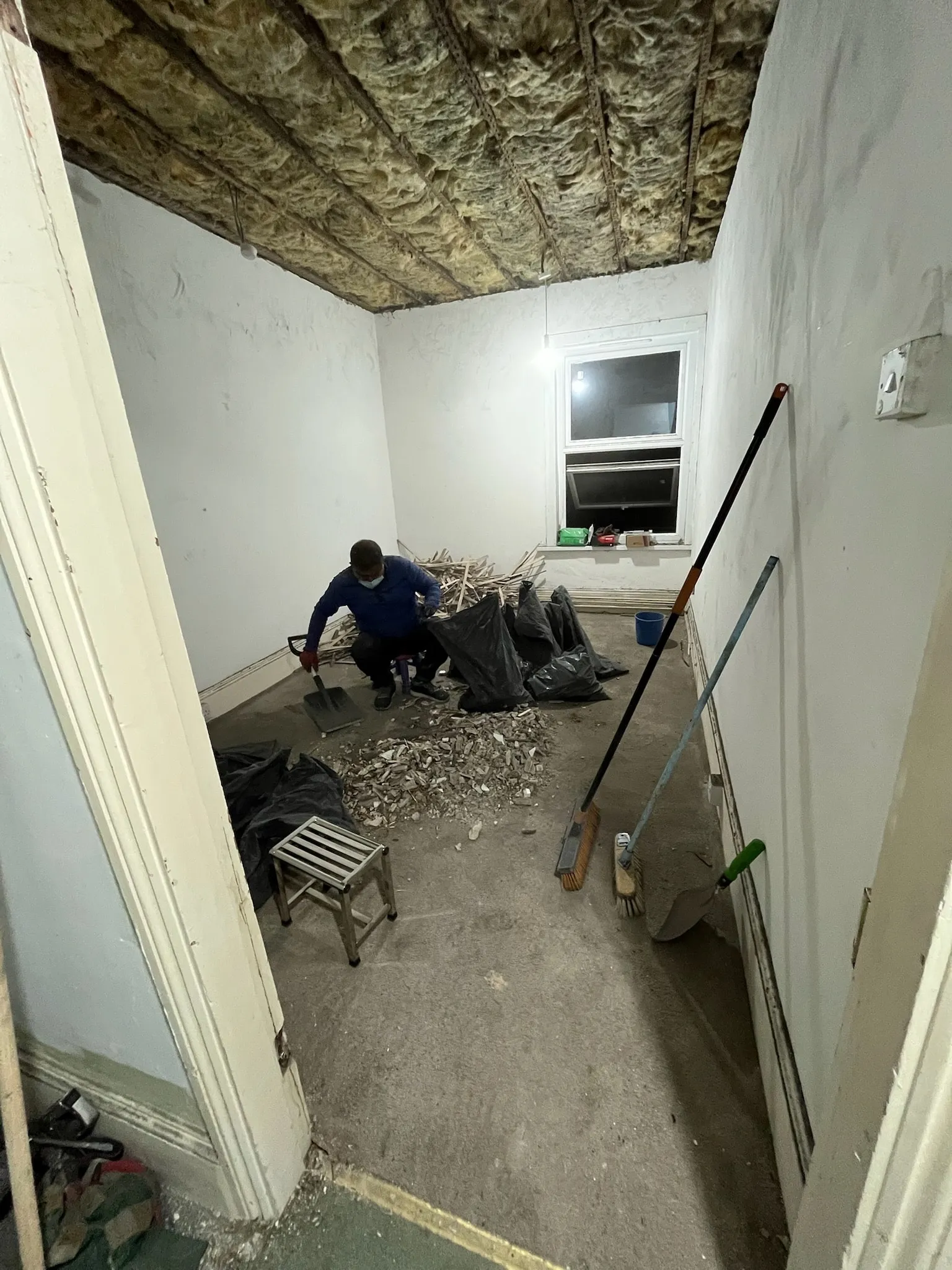 Clearing out old laths and plaster after taking down a ceiling.
What comes next
We have plenty of ideas for the farm’s future. We might bring back stables. We might turn part of the farm into a place to stay on Airbnb. We might even open a restaurant. Nothing is decided yet, and that is part of the fun.
We will share the whole process here on the blog: the progress, the setbacks and everything we learn about restoring a farmhouse from the 1700s.
Share your ideas
Do you have an idea for what Newham Hall Farm could become? Do you remember the farm from years ago, or know something about its history? We would love to hear from you.
Email us at newhamhallfarm@gmail.com.
Thank you for reading, and we hope you will follow along.